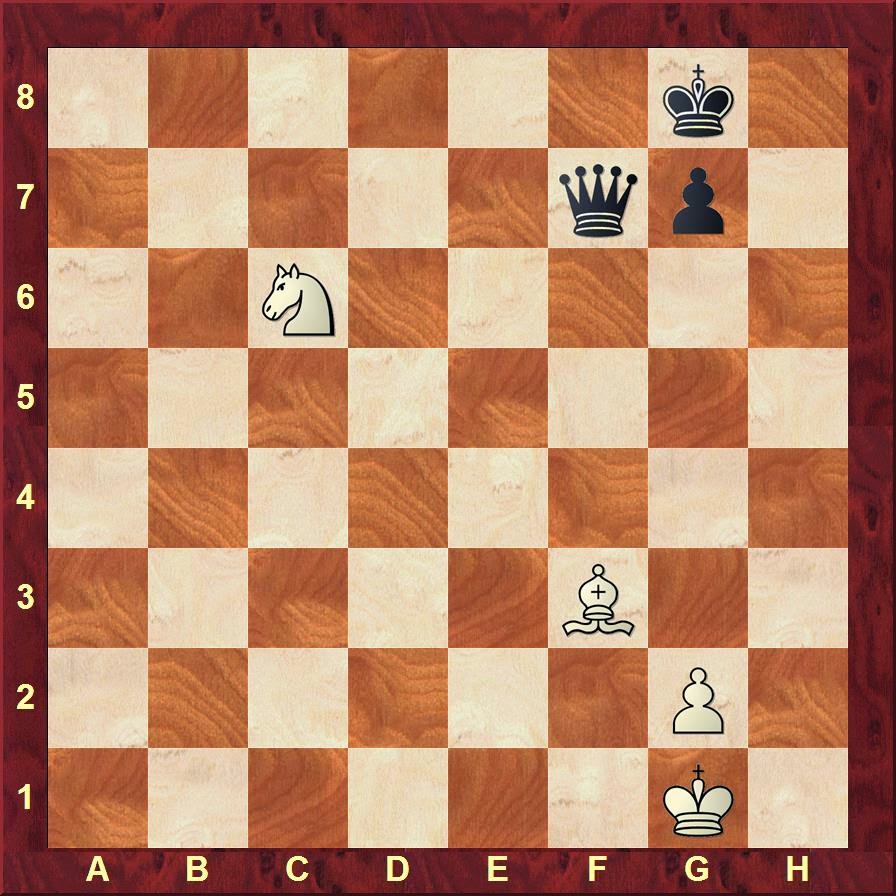
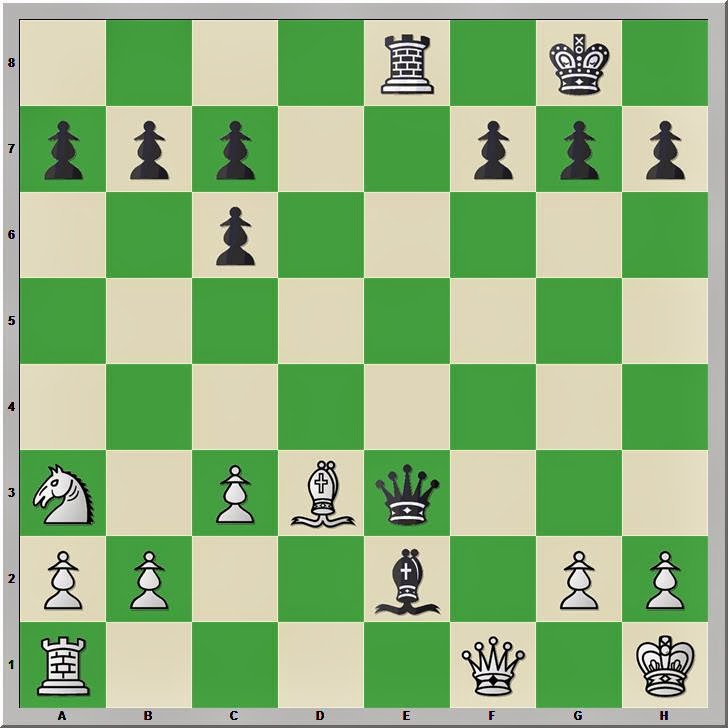
Tata Steel Chess, Round 3
The Tata Steel Tournament began on Saturday, in Wijk aan Zee. When I awoke this morning, the competitors were nearly two hours into play. I glanced through the opening moves in their games and two caught my eye. Anish Giri aggressively thrust forward his c-pawn against Fabiano Caruana. Magnus Carlsen, playing Black, thrust forward an a-pawn early against Radoslaw Wojtaszek.
Giri was provoked.
Giri,Anish (2784) -- Caruana,Fabiano (2820) [D37]
Tata Steel Masters Wijk aan Zee (3), 12.01.2015
1.d4 d5 2.c4 e6 3.Nc3 Be7 4.Nf3 Nf6 5.Bf4 0–0 6.e3 Nbd7 7.c5
This position appeared in this blog two months ago. Viswanathan Anand beat Magnus Carlsen from this position in game three of their World Championship match.
7...Ne4
Carlsen played 7...c6
8.Rc1
My database has four prior instances of 8.Rc1, three of them in the past two years.
8...Nxc3N 9.Rxc3 b6
Caruana provokes White's c-pawn.
10.c6

10...Nf6 11.a3 a5 12.Rc2 Ne4 13.Bd3 Ba6 14.Bxa6 Rxa6 15.Ne5
Giri's advanced c-pawn provides a forward post for a knight, and so a knight is headed there.
15...Bd6 16.Nd7 Bxf4 17.Nxf8 Bxe3 18.Nd7 Bg5
White has won an exchange, gaining a rook for a bishop and pawn. Caruana has shown so far in this tournament that his performance over the past few months is no fluke. He is the only player with two wins so far in this event.
19.Qd3 Ra8 20.a4 Nf6 21.h4

21...Bh6 22.Nxf6+ Qxf6 23.h5 Bg5 24O-O Qf4 25.Rd1 Bf6 26.g3
I will return to this game later.
Magnus Carlsen employed an unusual move order to reach the Dutch Defense, and then thrust forward his a-pawn early.
Wojtaszek,Radoslaw (2744) -- Carlsen,Magnus (2862) [A41]
Tata Steel Masters Wijk aan Zee (3), 12.01.2015
1.d4 d6 2.Nf3 g6 3.c4 f5 4.b4 Bg7 5.Bb2 a5
Already, my database finds only three reference games.
6.b5 a4 7.e3N
7.a3 was played by an unrated player in the 2001 Brasil championship.
7...Nf6 8.Be2 c6 9.bxc6 bxc6
Some elements of this position are not uncommon in the Dutch, but I cannot recall many Dutch games with a b-file that opened so early.

10.0–0 0–0 11.Qc2 Qc7 12.Nc3 a3
Now that the knight no longer guards a3, the pawn is able to harass the bishop.
13.Bc1 Nbd7 14.Rb1
Seize the open file. 14...Ne4 15.Nxe4 fxe4

16.Nd2
16.Qxe4 would be a mistake 16...Nc5 17.Qh4
17.dxc5 is worse Bf5 18.Qh4 Bf6 19.Ng5 Bxg5 20.Qxg5 Bxb1 Black has a clear material advantage.
17...Bf6 18.Qh6 Bg7 19.Qh4 Bf5 20.Ra1 White's pieces seem to lack effective coordination.
16...Nf6 17.Rb3 Bf5 18.Rxa3 h5
Another pawn thrust by Carlsen.
19.Rxa8 Rxa8
Wojtaszek has won a pawn and traded off a pair of rooks.
20.a3 h4
The h-pawn keeps coming.
21.Bb2 h3 22.g3 Qc8 23.Re1

The light squares around White's king might become a problem. Indeed, if Carlsen starts some activity on the kingside, White may find that his pieces cannot get there for defense due to the central pawn structure. Black appears to have more than adequate compensation for the pawn.
23...Rb8 24.Bc3 Nh7 25.a4 Ng5 26.Rb1 Ra8 27.Qd1
Wojtaszek makes an important defense move.
27...c5 28.Rb6 Qe6 29.g4 cxd4 30.Bxd4
More on this game later.
Giri -- Caruana
Returning to Giri -- Caruana, we find that White is maintaining some initiative. We left this game after 26.g3
26...Qg4 27.Qe2 Qh3
Black's queen is getting kicked around a bit. She is posted aggressively near White's king, but cannot do much alone.
28.Rc3 Be7 29.g4 Qh4 30.f4 Bd6 31.Rf1 Qf6 32.Qf2 Rb8 33.Rb3 g6 34.hxg6 hxg6 35.Kg2

Both White rooks are prepared to occupy the opened h-file.
35...Kf8
Caruana's king takes a walk to a safer haven.
36.Rh3 Ke7 37.b3 Rh8 38.g5 Qg7 39.Rxh8 Qxh8 40.Rh1 Qg8
Both players have made the time control.

Giri maintains a material advantage and has Caruana on the defensive. Whether this game is winnable, however, is less clear. Two results seem possible: White could win or the players could draw.
41.Rh3 Qg7 42.Kf3 Qg8
I will return to this game.
Wojtaszek -- Carlsen
I seem to have overestimated Carlsen's compensation.
My last comment was after Wojtaszek's 27.Qd1, which began to address some problems that I had identified, and then had the game score up to 30.Bxd4.

Carlsen's 28...Qe6 left his bishop without escape. White's potential problems on the kingside were real, and he acted to address those problems. The position opened up, and Black opted to sacrifice a bishop for some kingside play.
30...Bxd4 31.exd4 e3 32.gxf5 gxf5
The Polish player is ahead a bishop, but his pawn shield is shattered. Black's pawn shield never existed, as the World Champion has been thrusting it forward for most of the game.
33.Nf1 exf2+ 34.Kxf2 Ne4+ 35.Ke1
At this point in the game, Carlsen had perhaps two minutes. Wojtaszek had perhaps six after spending several minutes on a forced move.
Yasser Seirawan was quite clear that White is winning, but had some difficulty guessing the moves.
35...Qf6 36.Qd3 Rxa4 37.Rb1 Qh4+ 38.Ng3 Kf7 39.Qf3

Qh5 is threatened, forcing queens off the board.
39...Kg7 40.Qf4
An elementary decoy to set up a fork gets the queens off the board.
40...Qxf4
Alternatives are much worse. Both players have reached the time control, and White seems to have a decisive advantage.
41.Nh5+ Kf7 42.Nxf4 Ng5 43.d5 Kf6 44.Kf2

44...Ra3 45.Bd3 Ra2+ 46.Kg3 Ra3 47.Re1 Ne4+ 48.Kf3 Ng5+ 49.Ke3 Ra2 50.Re2 Ra3 51.Rf2 Ne4 52.Rf3 0-1
I spent some time watching Seirawan discuss Wesley So's win against Levon Aronian with So. So also commented on Giri -- Caruana during their discission.
Giri -- Caruana
We left this game after 42...Qg8.
43.Kg2 Kd8 44.Qh4 Qe8

So thought that he would probably play 45.Qh8 were he in this position. It seems to me that dropping the f-pawn would not be such a good idea. Of course, So and Seirawan were going through the moves quickly and may have had a slightly different position on their analysis board. They said they could not understand what White had in mind with the king dance between g2 and f3.
45.Rc3 Kc8 46.Kf3 Kb8 47.Qh7 Qf8 48.Kg4 Ka7
Black's king looks secure. Seirawan described its journey as a marathon.
49.Rf3 Qe8 50.Qg7 Qxc6 51.Qxf7 Qc1 52.Qxe6 Qg1+

Will Black find a forced draw by repetition?
53.Rg3 Qxd4 54.Qe3 Qh8 55.Rh3 Qc8+ 56.Kh4 Qf8 57.Rf3 Qh8+ 58.Kg3 Qh5 59.Kg2 Qg4+ 60.Kf1 Bc5 61.Qd3 Qg1+ 62.Ke2 Bb4

That Black threatens a checkmate in one accentuates that Caruana has seized the inititiative. He is not playing for a win, but his threats keep White from making any progress. Sooner or later, the pawns on the kingside are destined for liquidation.
63.Rf1 Qg4+ 64.Qf3 Qf5 65.Rd1 c6 66.Rh1 Bc5 67.Kf1 Bd6 68.Rh7+ Kb8 69.Qe3

White, too, has threats.
69...Qxf4+ 70.Qxf4 Bxf4
Caruana forced the queens off the board, and with them the kingside pawns are nearly liquidated.
71.Rg7 Bxg5 72.Rxg6 Be7 73.Rxc6

I cannot imagine either player making any progress from this position unless time trouble causes a blunder.
73...Bc5 74.Ke2 Kb7 75.Rg6 Kc7 76.Kf3 Kd7 77.Kf4 Bd4 78.Kf5 Ke7 79.Rg4 Bc3 80.Rg3 Bb2 81.Rg2 Bc3 82.Rc2 Ba1 83.Rc6 Bd4 84.Rh6 Kd7 85.Re6 Kc7 86.Kf4 Kd7 87.Rh6 Kc7 88.Kf3 Kd7 89.Ke2 Bc5 90.Kf3 Bd4 91.Rh4 Bc5 92.Rg4 Kd6 93.Rg6+ Kd7 94.Rh6 Bd4 95.Kf4 Kc7 96.Kf5 Kd7 97.Rh4 Bc3 ½–½
I usually follow this tournament live and often blog my perceptions of one or more selective games. My busy schedule has made it hard to observe this year. I have not yet found the time to look at Saturday's games, and only glanced through yesterday's superficially.
The Tata Steel Tournament began on Saturday, in Wijk aan Zee. When I awoke this morning, the competitors were nearly two hours into play. I glanced through the opening moves in their games and two caught my eye. Anish Giri aggressively thrust forward his c-pawn against Fabiano Caruana. Magnus Carlsen, playing Black, thrust forward an a-pawn early against Radoslaw Wojtaszek.
Giri was provoked.
Giri,Anish (2784) -- Caruana,Fabiano (2820) [D37]
Tata Steel Masters Wijk aan Zee (3), 12.01.2015
1.d4 d5 2.c4 e6 3.Nc3 Be7 4.Nf3 Nf6 5.Bf4 0–0 6.e3 Nbd7 7.c5
This position appeared in this blog two months ago. Viswanathan Anand beat Magnus Carlsen from this position in game three of their World Championship match.
7...Ne4
Carlsen played 7...c6
8.Rc1
My database has four prior instances of 8.Rc1, three of them in the past two years.
8...Nxc3N 9.Rxc3 b6
Caruana provokes White's c-pawn.
10.c6
Black to move
10...Nf6 11.a3 a5 12.Rc2 Ne4 13.Bd3 Ba6 14.Bxa6 Rxa6 15.Ne5
Giri's advanced c-pawn provides a forward post for a knight, and so a knight is headed there.
15...Bd6 16.Nd7 Bxf4 17.Nxf8 Bxe3 18.Nd7 Bg5
White has won an exchange, gaining a rook for a bishop and pawn. Caruana has shown so far in this tournament that his performance over the past few months is no fluke. He is the only player with two wins so far in this event.
19.Qd3 Ra8 20.a4 Nf6 21.h4
Black to move
21...Bh6 22.Nxf6+ Qxf6 23.h5 Bg5 24O-O Qf4 25.Rd1 Bf6 26.g3
I will return to this game later.
Magnus Carlsen employed an unusual move order to reach the Dutch Defense, and then thrust forward his a-pawn early.
Wojtaszek,Radoslaw (2744) -- Carlsen,Magnus (2862) [A41]
Tata Steel Masters Wijk aan Zee (3), 12.01.2015
1.d4 d6 2.Nf3 g6 3.c4 f5 4.b4 Bg7 5.Bb2 a5
Already, my database finds only three reference games.
6.b5 a4 7.e3N
7.a3 was played by an unrated player in the 2001 Brasil championship.
7...Nf6 8.Be2 c6 9.bxc6 bxc6
Some elements of this position are not uncommon in the Dutch, but I cannot recall many Dutch games with a b-file that opened so early.
White to move
10.0–0 0–0 11.Qc2 Qc7 12.Nc3 a3
Now that the knight no longer guards a3, the pawn is able to harass the bishop.
13.Bc1 Nbd7 14.Rb1
Seize the open file. 14...Ne4 15.Nxe4 fxe4
White to move
16.Nd2
16.Qxe4 would be a mistake 16...Nc5 17.Qh4
17.dxc5 is worse Bf5 18.Qh4 Bf6 19.Ng5 Bxg5 20.Qxg5 Bxb1 Black has a clear material advantage.
17...Bf6 18.Qh6 Bg7 19.Qh4 Bf5 20.Ra1 White's pieces seem to lack effective coordination.
16...Nf6 17.Rb3 Bf5 18.Rxa3 h5
Another pawn thrust by Carlsen.
19.Rxa8 Rxa8
Wojtaszek has won a pawn and traded off a pair of rooks.
20.a3 h4
The h-pawn keeps coming.
21.Bb2 h3 22.g3 Qc8 23.Re1
Black to move
The light squares around White's king might become a problem. Indeed, if Carlsen starts some activity on the kingside, White may find that his pieces cannot get there for defense due to the central pawn structure. Black appears to have more than adequate compensation for the pawn.
23...Rb8 24.Bc3 Nh7 25.a4 Ng5 26.Rb1 Ra8 27.Qd1
Wojtaszek makes an important defense move.
27...c5 28.Rb6 Qe6 29.g4 cxd4 30.Bxd4
More on this game later.
Giri -- Caruana
Returning to Giri -- Caruana, we find that White is maintaining some initiative. We left this game after 26.g3
Black to move
 |
| After 26.g3 |
Black's queen is getting kicked around a bit. She is posted aggressively near White's king, but cannot do much alone.
28.Rc3 Be7 29.g4 Qh4 30.f4 Bd6 31.Rf1 Qf6 32.Qf2 Rb8 33.Rb3 g6 34.hxg6 hxg6 35.Kg2
Black to move
Both White rooks are prepared to occupy the opened h-file.
35...Kf8
Caruana's king takes a walk to a safer haven.
36.Rh3 Ke7 37.b3 Rh8 38.g5 Qg7 39.Rxh8 Qxh8 40.Rh1 Qg8
Both players have made the time control.
White to move
Giri maintains a material advantage and has Caruana on the defensive. Whether this game is winnable, however, is less clear. Two results seem possible: White could win or the players could draw.
41.Rh3 Qg7 42.Kf3 Qg8
I will return to this game.
Wojtaszek -- Carlsen
I seem to have overestimated Carlsen's compensation.
My last comment was after Wojtaszek's 27.Qd1, which began to address some problems that I had identified, and then had the game score up to 30.Bxd4.
Black to move
Carlsen's 28...Qe6 left his bishop without escape. White's potential problems on the kingside were real, and he acted to address those problems. The position opened up, and Black opted to sacrifice a bishop for some kingside play.
30...Bxd4 31.exd4 e3 32.gxf5 gxf5
The Polish player is ahead a bishop, but his pawn shield is shattered. Black's pawn shield never existed, as the World Champion has been thrusting it forward for most of the game.
33.Nf1 exf2+ 34.Kxf2 Ne4+ 35.Ke1
At this point in the game, Carlsen had perhaps two minutes. Wojtaszek had perhaps six after spending several minutes on a forced move.
Yasser Seirawan was quite clear that White is winning, but had some difficulty guessing the moves.
35...Qf6 36.Qd3 Rxa4 37.Rb1 Qh4+ 38.Ng3 Kf7 39.Qf3
Black to move
Qh5 is threatened, forcing queens off the board.
39...Kg7 40.Qf4
An elementary decoy to set up a fork gets the queens off the board.
40...Qxf4
Alternatives are much worse. Both players have reached the time control, and White seems to have a decisive advantage.
41.Nh5+ Kf7 42.Nxf4 Ng5 43.d5 Kf6 44.Kf2
Black to move
44...Ra3 45.Bd3 Ra2+ 46.Kg3 Ra3 47.Re1 Ne4+ 48.Kf3 Ng5+ 49.Ke3 Ra2 50.Re2 Ra3 51.Rf2 Ne4 52.Rf3 0-1
I spent some time watching Seirawan discuss Wesley So's win against Levon Aronian with So. So also commented on Giri -- Caruana during their discission.
Giri -- Caruana
"White is clearly playing for a win, but ..."
Wesley So
We left this game after 42...Qg8.
43.Kg2 Kd8 44.Qh4 Qe8
White to move
So thought that he would probably play 45.Qh8 were he in this position. It seems to me that dropping the f-pawn would not be such a good idea. Of course, So and Seirawan were going through the moves quickly and may have had a slightly different position on their analysis board. They said they could not understand what White had in mind with the king dance between g2 and f3.
45.Rc3 Kc8 46.Kf3 Kb8 47.Qh7 Qf8 48.Kg4 Ka7
Black's king looks secure. Seirawan described its journey as a marathon.
49.Rf3 Qe8 50.Qg7 Qxc6 51.Qxf7 Qc1 52.Qxe6 Qg1+
White to move
Will Black find a forced draw by repetition?
53.Rg3 Qxd4 54.Qe3 Qh8 55.Rh3 Qc8+ 56.Kh4 Qf8 57.Rf3 Qh8+ 58.Kg3 Qh5 59.Kg2 Qg4+ 60.Kf1 Bc5 61.Qd3 Qg1+ 62.Ke2 Bb4
White to move
That Black threatens a checkmate in one accentuates that Caruana has seized the inititiative. He is not playing for a win, but his threats keep White from making any progress. Sooner or later, the pawns on the kingside are destined for liquidation.
63.Rf1 Qg4+ 64.Qf3 Qf5 65.Rd1 c6 66.Rh1 Bc5 67.Kf1 Bd6 68.Rh7+ Kb8 69.Qe3
Black to move
White, too, has threats.
69...Qxf4+ 70.Qxf4 Bxf4
Caruana forced the queens off the board, and with them the kingside pawns are nearly liquidated.
71.Rg7 Bxg5 72.Rxg6 Be7 73.Rxc6
Black to move
I cannot imagine either player making any progress from this position unless time trouble causes a blunder.
73...Bc5 74.Ke2 Kb7 75.Rg6 Kc7 76.Kf3 Kd7 77.Kf4 Bd4 78.Kf5 Ke7 79.Rg4 Bc3 80.Rg3 Bb2 81.Rg2 Bc3 82.Rc2 Ba1 83.Rc6 Bd4 84.Rh6 Kd7 85.Re6 Kc7 86.Kf4 Kd7 87.Rh6 Kc7 88.Kf3 Kd7 89.Ke2 Bc5 90.Kf3 Bd4 91.Rh4 Bc5 92.Rg4 Kd6 93.Rg6+ Kd7 94.Rh6 Bd4 95.Kf4 Kc7 96.Kf5 Kd7 97.Rh4 Bc3 ½–½
I usually follow this tournament live and often blog my perceptions of one or more selective games. My busy schedule has made it hard to observe this year. I have not yet found the time to look at Saturday's games, and only glanced through yesterday's superficially.
Detail:
Pawn Thrusts